How Gen Z’s Demand for Authentic UGC Over Polished Marketing Is Reshaping eCommerce CRO
Apr 23, 2026 | 3 Min Read | 1038 Views
It started, as most revolutions do, quietly.
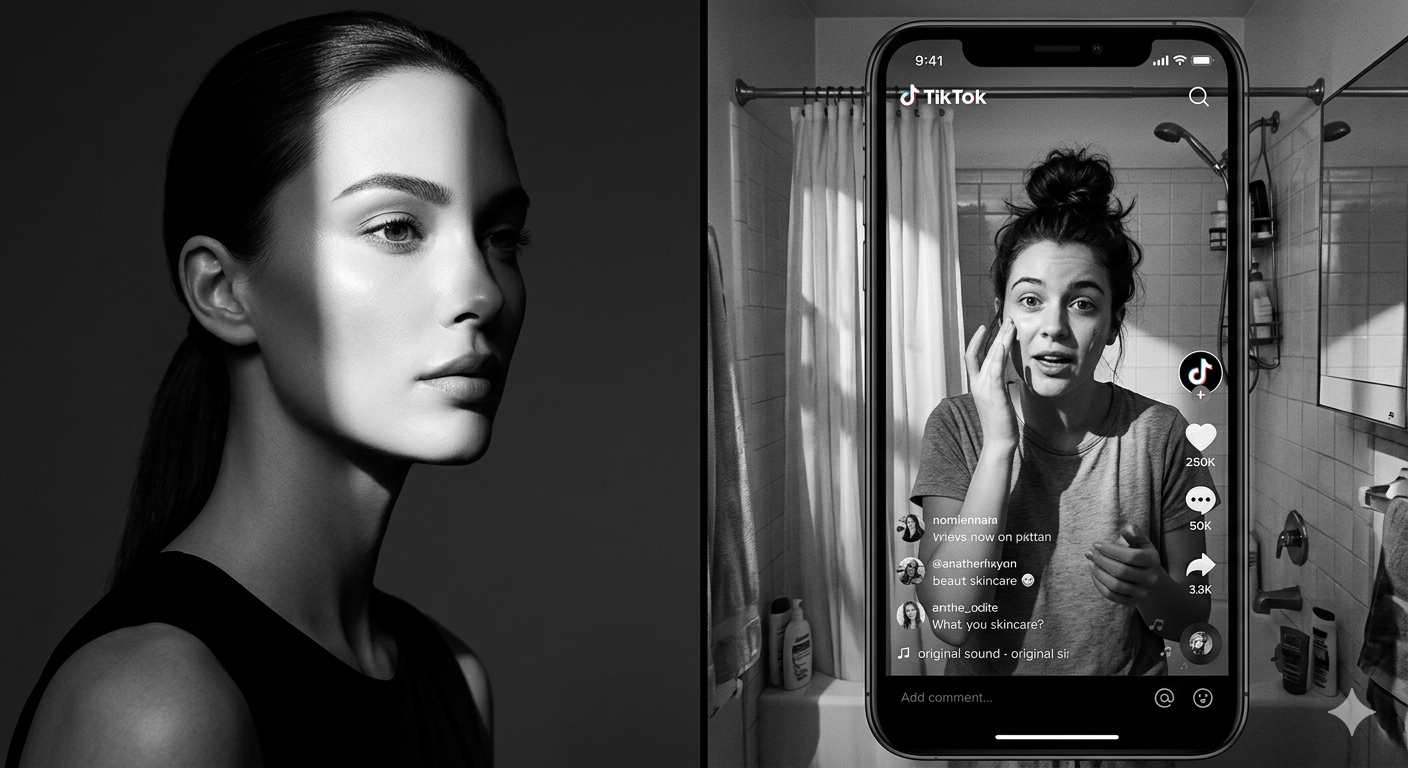
Somewhere around 2019, a generation raised on YouTube tutorials, Reddit threads, and unboxing videos started doing something brands hadn’t predicted: they stopped believing the ads. Not just ignoring them, actively DISTRUSTING them. The slicker the production, the faster the scroll. The more aspirational the model, the more hollow the message felt.
These were Gen Z shoppers. And they were about to rewrite the rules of eCommerce conversion.
Today, this isn’t a trend. It’s an infrastructure shift. The way a generation buys, how they discover, evaluate, trust, and ultimately convert has fundamentally reorganized around one thing: content made by real people, for real people, with no pretense of perfection. User-Generated Content, or UGC, isn’t just a marketing tactic anymore. For CRO professionals, it has become the highest-leverage conversion tool in the digital toolkit.
The Trust Economy
Here’s what the data says plainly: 60% of consumers believe UGC is the most authentic form of marketing content, and shoppers are nearly 2.5x more likely to describe user-generated content as authentic versus brand-created content. That gap isn’t a preference, it’s a signal of broken trust in traditional advertising.
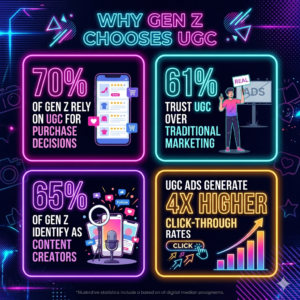
For Gen Z specifically, the numbers are unambiguous. Over 70% of Gen Z rely on UGC to make purchase decisions, and 61% say they trust user-generated content more than any other format precisely because it feels real. They grew up as creators themselves, the 2024 YouTube Culture and Trends Report found that 65% of Gen Z respondents consider themselves content creators. They know what a produced ad looks like. They know what a real recommendation looks like. And they choose accordingly.
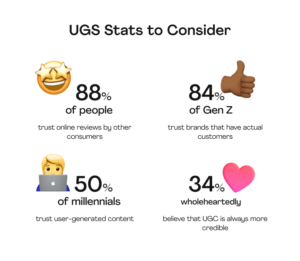
The implications for eCommerce CRO are direct and measurable. Analysis of 1,200 websites showed that the mere presence of UGC on a product page yields a conversion rate of around 3.2% ,and that rate jumps by an additional 3.8% when visitors actively engage with that UGC.
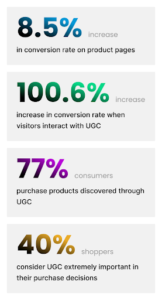
Adding reviews to purchase pages alone increases conversions by 10%. Visitors who interact with written user content convert at rates 102.4% higher than the average site visitor. These aren’t incremental gains. These are category-level shifts in purchase behavior.
The Platforms Rewrote the Playbook
TikTok didn’t just create a new social platform. It created a new consumer psychology. When UGC on TikTok is 22% more effective than brand-created video, and 83% of TikTok users say UGC makes brands feel more authentic, the implication isn’t that brands should post more TikToks.

The implication is that the type of content ,raw, immediate, personal, unscripted ,is now the expectation that follows Gen Z across every touchpoint, including product pages, checkout flows, and email campaigns.
This expectation is colliding with another structural shift: AI is now compressing the research phase of the buyer journey entirely. As explored in AI Is Compressing the Buyer Journey, Gen Z shoppers increasingly arrive on product pages already pre-persuaded, which means your UGC isn’t just building trust anymore. It’s the confirmation signal they’re looking for before they click buy.
Instagram, where UGC posts generate approximately 70% more engagement than standard brand posts, leads product discovery at 62% among social platforms. Vertical-form video ,Reels, Stories, Shorts ,carries watch-completion rates up to 90% higher than horizontal content. UGC video ads show 35% higher watch-through rates compared to polished brand productions. And UGC images on eCommerce product pages? They drive 28% higher engagement and have been shown to increase conversions by 28% when placed directly on the product page itself.
The math is not subtle. But the strategic insight runs deeper than the numbers.
Five Campaigns That Proved the Thesis
The brands that understood this earliest built the strongest conversion engines. Their campaigns are now case studies in how authentic community content outperforms any studio budget.
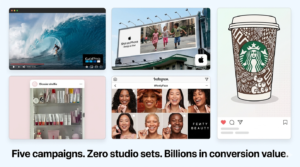
🎬 GoPro – Million Dollar Challenge GoPro didn’t run ads. They ran a movement. By inviting users to submit their best footage for a share of $1 million, they generated over 29,000 video submissions from 125 countries in a single campaign cycle. The GoPro YouTube channel ,built almost entirely on UGC ,has amassed over 10 million subscribers, with the top three user-submitted videos accumulating over 420 million combined views. On Instagram, the #GoPro hashtag has over 50 million posts. Their product doesn’t appear in a studio. It appears conquering mountains, diving reefs, and falling out of aircraft ,because real customers put it there. 🔗 GoPro’s YouTube UGC Channel
🍎 Apple – #ShotOniPhone Apple’s campaign was deceptively simple: invite iPhone users to submit their best photos, then feature the winners on billboards, social media, and Apple’s own product pages worldwide. The genius wasn’t the prize ,it was the implication. Apple said, with its entire advertising spend, that its camera was so good the best proof was in the hands of its users. Real shots. Real people. Real credibility. The campaign turned millions of everyday photographers into global Apple ambassadors, without a single frame of professionally produced footage. 🔗 Apple’s #ShotOniPhone Campaign Gallery
☕ Starbucks – White Cup Contest Starbucks asked customers to draw on their cups and share the results. Thousands entered. The winning design became a limited-edition reusable product sold globally. The campaign didn’t just generate UGC ,it made the customer the designer, the marketer, and the advocate simultaneously. The resulting engagement drove millions of social impressions at near-zero cost. 🔗 Starbucks White Cup Contest Coverage
💄 Glossier – #GlossierRep Glossier built its entire brand architecture around UGC from inception. The company treats every customer as a potential ambassador, regularly featuring customer “shelfies,” makeup looks, and skincare routines on its own official channels ,elevating real user photos to the same visual plane as professional campaigns. The hashtags #GlossierRep and #GlossierPink have become self-sustaining content engines, creating a community loop where authenticity generates more authenticity. 🔗 Glossier’s Instagram UGC Community
💋 Fenty Beauty – #FentyFace Rather than spending on major influencer contracts, Fenty Beauty sent products to micro-creators with no scripts and no guidelines. The resulting content ,diverse, personal, unfiltered ,flooded social feeds with the brand’s foundational message of inclusivity far more convincingly than any campaign brief could have specified. Fenty’s first 40 days generated $100 million in sales, driven significantly by community-led content that felt like peer recommendation, not advertising. 🔗 Fenty Beauty UGC on Instagram
The CRO Imperative: Embedding UGC Into the Funnel
Understanding that Gen Z prefers UGC is table stakes. The strategic edge is knowing precisely where to deploy it in the conversion funnel to maximize lift.
On product pages, UGC is most powerful at the moment of decision hesitation. Research shows that 55% of shoppers hesitate to purchase without UGC on the product page, while 40% will abandon the purchase entirely if none is present. Displaying customer images alongside or replacing professional product shots can lift conversions by up to 28%. Review sections are not optional features ,they are conversion infrastructure.
In paid advertising, the shift is already happening at scale. UGC-based ads generate 4x higher click-through rates than standard creative, and UGC ads reduce cost-per-click by up to 50% according to Shopify data. With 86% of brands reporting that UGC boosts the effectiveness of their paid media, the argument for pulling budget from polished productions toward customer-generated creative is now backed by hard performance data.
In email marketing, UGC increases click-through rates by 78% ,a figure that makes it one of the single highest-ROI inclusions in email content strategy.
The practical playbook is clear: audit your current product pages for UGC presence, build review and photo-submission flows into post-purchase sequences, repurpose authentic customer video content as paid creative, and run A/B tests comparing UGC-forward landing pages against traditional brand imagery. The results consistently favor the former.
And none of this requires an enterprise budget. As outlined in Budget CRO: Low-Cost Strategies That Deliver Big Wins, the highest-impact CRO improvements are often the ones that cost the least to implement, especially when your most powerful asset (your customers’ own content) is already sitting on social media waiting to be used.
The Authenticity Paradox
There is one critical nuance that separates brands who win with UGC from brands who merely imitate it: Gen Z can smell fabrication.
Polished UGC ,the kind commissioned to look raw but produced by a briefed creator with lighting rigs and a script ,registers as hollow to a generation that has grown up inside the platforms where real UGC lives.
It’s also worth noting this isn’t just a consumer psychology issue anymore, it’s an algorithmic one. Google’s 2025 E-E-A-T update now explicitly penalizes fabricated authenticity signals, and its implications for eCommerce marketers are clear: fake experience signals don’t just fail with Gen Z. They now fail with search engines too.
The formats work. The aesthetic works. But only when the content is genuinely organic, or at minimum, genuinely unscripted.
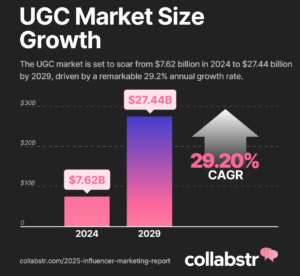
The UGC market is now estimated at over $7.6 billion in 2025, up 69% from 2024. By 2033, projections suggest 78% of all online content will be user-generated. This is not a marketing channel. It is becoming the dominant texture of the internet itself ,and for eCommerce brands, the question is no longer whether to integrate it, but how deeply and how honestly.
The brands that convert best in this environment are the ones that hand the story to their customers and step aside.
References
The Shelf. (2025, April 10). UGC is redefining social media marketing in 2025, here’s how to leverage it.
Bazaarvoice. (2024). 64 user-generated content statistics to know in 2024.
Taggbox. (2025). User-generated content (UGC) stats and facts, 2026.
Camphouse. (2025, October 28). Gen Z trends 2025: What marketers need to know.
inBeat Agency. (2025). 50 UGC statistics + strategic implications for your brand in 2025.
Backlinko. (2025). 24 key user-generated content (UGC) statistics for 2026.
Marketing LTB. (2025). 70+ powerful UGC statistics (2026) + actionable insights to leverage them.
Yotpo. (2023). How UGC increases conversion rate for ecommerce.
WordStream. (2026, January 7). 19 conversion rate optimization statistics for 2026.
ConvertCart. (2025). Product page statistics every eCommerce pro should know.
YouScan. (2026). UGC content examples: 12 brands doing it right in 2026.
Impulze.ai. (2025, March 17). 5 UGC campaigns that went viral (and what you can learn from them).
Digital Agency Network. (2026, January 6). Beauty marketing campaigns that broke the internet.
Catarina Mello. (2025). 10 statistics you need to know about the UGC industry in 2025.