How AI-Driven Search Is Changing CRO (and What Conversion Teams Need to Do About It)
Feb 14, 2026 | 3 Min Read | 2176 Views
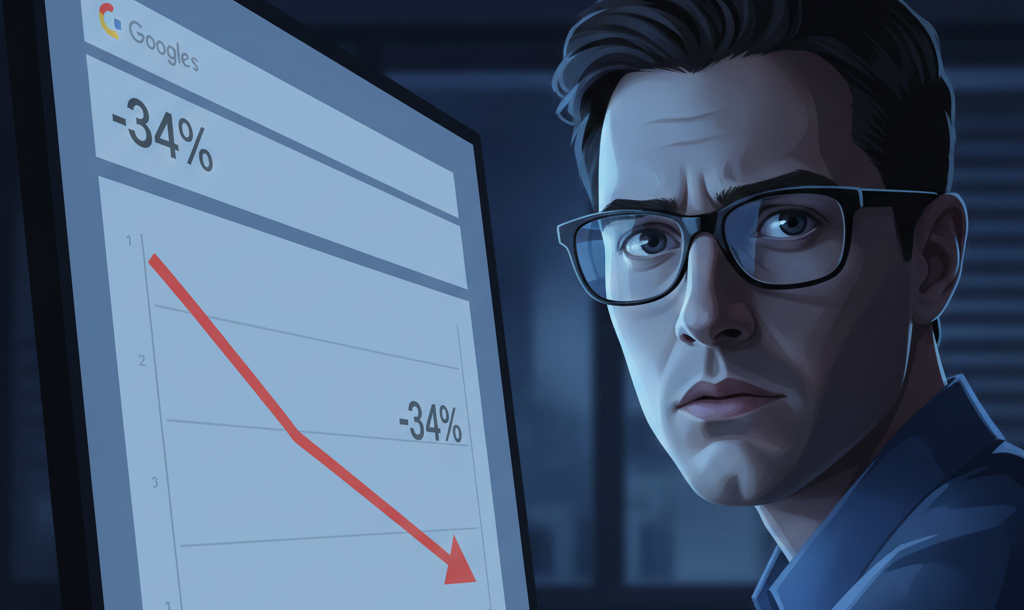
Sarah had just wrapped her monthly analytics review when the numbers hit her like cold water. Her SaaS company’s organic traffic from Google was down 34% year-over-year. Yet paradoxically, their search rankings had actually improved for their target keywords. Most were now sitting in positions 1-3.
The conversion rate told a different story entirely. Those visitors who did click through from search were converting at 11.2%, more than triple their historical 3.4% average. Higher conversion rates from lower traffic volumes. It didn’t make mathematical sense until she dug into the referral sources.
Google’s AI Overviews were appearing for 73% of her target keywords. Most searchers were getting their questions answered directly on the results page. The ones who actually clicked through? They’d already been pre-qualified by Google’s AI. They knew what the product did, understood the pricing model, and had specific implementation questions. They weren’t browsing, they were ready to buy!
Sarah’s experience mirrors what conversion teams across industries discovered in 2025: AI-driven search hasn’t killed conversion optimization. It fundamentally transformed what CRO must accomplish.
The Seismic Shift Nobody Saw Coming
For two decades, the conversion optimization playbook remained remarkably stable. Attract traffic through SEO and paid channels, then optimize landing pages to convert visitors into customers. CRO teams focused on persuading skeptical browsers, answering objections, building trust, and guiding visitors through education to decision.
That model collapsed in 2025.
AI Overviews now appear in approximately 13-19% of all searches as of mid-2025, with presence growing by 528% for entertainment queries, 387% for restaurant queries, and 381% for travel queries between March 13-27, 2025. When AI Overviews are present, organic click-through rates plummeted 61%, from 1.76% to 0.61%, while paid CTR crashed 68%, from 19.7% to 6.34%.
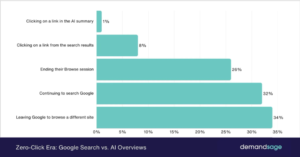
The traffic erosion would devastate businesses if the story ended there. But it doesn’t.
Microsoft Advertising reports that Copilot-assisted customer journeys are 33% shorter on average than traditional search, and high-intent conversion rates are 76% higher for AI-powered experiences compared to traditional search. Multiple independent analyses confirm this pattern.
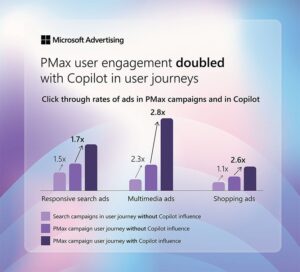
Ahrefs found AI visitors view 50% more pages per session than traditional search users and spend 8 seconds longer on site on average. Analysis of 12.3 million website visits shows AI traffic converts at rates 4-5x higher than Google on average, with the average AI visitor converting at 14.2% compared to Google’s 2.8%.
The data reveals an uncomfortable truth: AI-driven search doesn’t reduce quality traffic, it eliminates unqualified browsers entirely. The visitors who make it through to your site have already been vetted, educated, and qualified by AI. They’re not discovering your solution; they’re confirming their decision to choose it.
This fundamental shift demands that conversion teams completely rethink what “optimization” means.
From Persuasion to Confirmation: The New CRO Mandate
Traditional CRO operated on a persuasion model. Visitors arrived skeptical, uninformed, or comparison shopping. Landing pages needed to educate prospects about problems they didn’t fully understand, differentiate solutions from alternatives they hadn’t compared, build trust with audiences who’d never heard of the brand, and overcome objections visitors hadn’t yet articulated.
AI-driven search eliminates most of these requirements before visitors ever click.
Consider what happens when someone searches “project management software for remote teams under 50 people” in Google’s AI Mode or ChatGPT. The AI synthesizes information from dozens of sources, comparing features, analyzing pricing tiers, evaluating integration capabilities, and surfacing user reviews. By the time the searcher decides to visit a specific vendor’s website, they’ve already completed 80% of their research and decision-making.
They don’t need persuasion. They need confirmation.
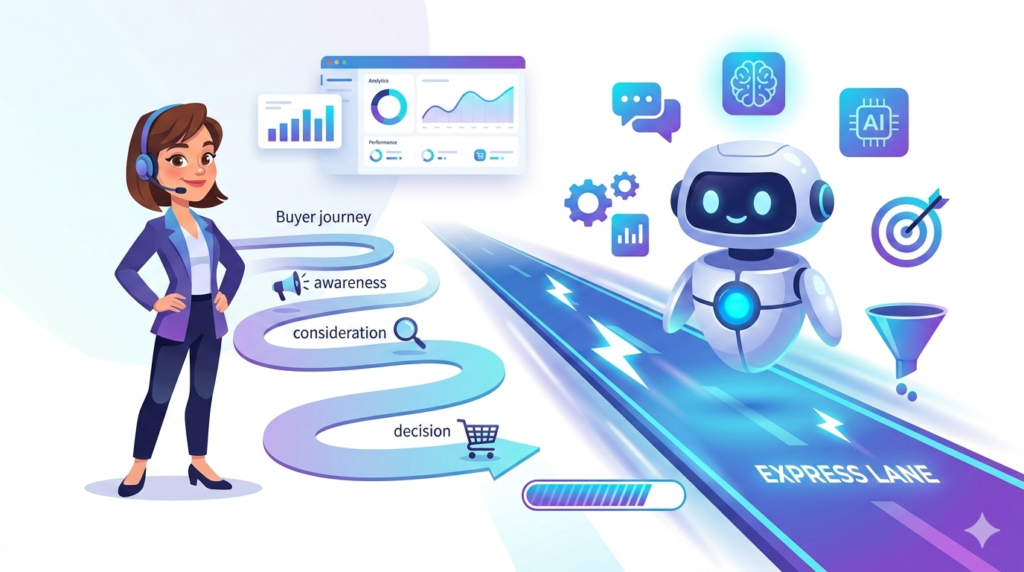
This shift from persuasion to confirmation changes everything about effective CRO:
The research phase happens outside your website. Many users begin with AI-powered research but ultimately convert through organic search or direct channels, making AI search valuable for top-of-funnel discovery despite its lack of direct conversions. Your landing pages no longer need to educate visitors about basic product capabilities or industry problems. AI has already handled that comprehensively.
Objection-handling becomes precision work. Traditional CRO addressed broad objections (“Is this secure?” “Will this integrate with my existing tools?”). AI-qualified visitors arrive with specific concerns based on their unique context. Generic trust signals matter less than addressing the exact implementation questions preventing their final decision.
Comparison becomes confirmation of choice. When visitors researched alternatives manually, landing pages needed extensive competitive differentiation. Now, AI has already shown them how you compare to competitors. Visitors clicking through have tentatively selected you. Your job isn’t convincing them you’re better, it’s confirming they made the right choice and removing final friction.
Speed to value replaces comprehensive education. AI search leads to 73% faster purchase decisions because users arrive further along their journey. Lengthy educational content that once demonstrated expertise now creates unnecessary friction. AI-qualified visitors want rapid validation and clear next steps, not comprehensive tutorials.
The implications for conversion teams are profound. The tactics that drove success for twenty years, elaborate value proposition frameworks, extensive educational content hierarchies, multi-touch nurture sequences before conversion asks, comprehensive competitive positioning are becoming increasingly obsolete or need complete reimagining for an audience that’s already been pre-qualified by AI.
The Three Critical CRO Shifts for the AI Search Era
Adapting to AI-driven search requires conversion teams to fundamentally restructure their approach across three dimensions.
Shift 1: Optimize for AI Citation Before Landing Page Conversion
Brands cited in AI Overviews earn 35% higher organic CTR and 91% higher paid CTR than non-cited brands on the same queries. Getting cited doesn’t just maintain visibility, it dramatically improves the quality and conversion rate of traffic that does click through.
Yet most conversion teams have zero visibility into whether their content appears in AI responses. They’re optimizing landing pages for traffic that’s increasingly filtered by algorithms they don’t influence.
The new CRO playbook must begin earlier in the funnel, specifically, by ensuring AI systems cite your content when answering queries in your category. This isn’t traditional SEO. It’s what practitioners are calling Generative Engine Optimization (GEO).
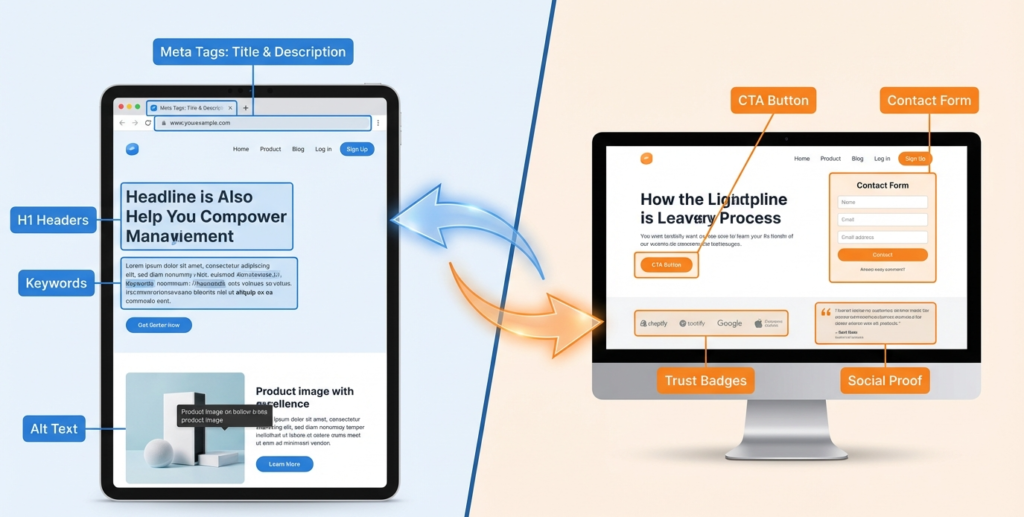
Structure content for AI extraction. AI systems favor content organized in clear hierarchies with question-based headings, concise 40-60 word answers immediately following questions, specific data and statistics over vague claims, and structured data markup highlighting key information. Your product pages should answer the exact questions prospects ask AI systems, formatted precisely how those systems want to consume and synthesize information.
Build citation authority systematically. Getting cited requires building citation history, developing authoritative backlink profiles, earning brand mentions on quality sites, and demonstrating sustained expertise in your topic area. Unlike traditional link building for PageRank, citation authority requires consistent presence across sources AI systems trust: industry publications, technical documentation, peer-reviewed content, and active community discussions.
Track AI visibility as a primary metric. Traditional CRO tracked visitors, conversion rates, and revenue. AI-era CRO must add citation frequency across AI platforms (Google AI Overviews, ChatGPT, Perplexity, Claude), share of voice in AI responses for target queries, and brand mention quality in synthesized answers. Most brands see meaningful share of voice improvements within one quarter of dedicated AI optimization, with compounding returns over subsequent quarters.
The uncomfortable reality: investing resources in AI citation optimization means temporarily de-prioritizing traditional on-page conversion tactics. But only 1% of users click on sources cited within AI Overviews, with the primary cited source receiving most of those limited clicks while secondary citations get almost nothing. Being cited first matters enormously. Being cited third is nearly worthless for traffic generation.
Shift 2: Design for Confirmation Velocity
AI-qualified visitors don’t need convincing, they need rapid confirmation that clicking through was the right decision. Every second of friction increases abandonment risk for users who’ve already invested significant time researching with AI.
Eliminate educational bottlenecks. Traditional landing pages opened with problem agitation and extensive context-setting. For AI-qualified visitors, this creates dissonance. They’ve already understood the problem via AI; repetitive education signals you don’t recognize their research level. Lead instead with immediate value confirmation: “You’ve researched [category], and you’re evaluating [your solution]. Here’s how to confirm we’re the right fit for [specific use case].”
Implement intelligent progressive disclosure. Don’t remove detailed information, some visitors still need it. But recognize AI-qualified users want different depth than manual researchers. Use progressive disclosure to offer rapid paths for qualified visitors while maintaining comprehensive resources for those who need them. Interactive elements that let visitors self-select their journey depth work exceptionally well.
Accelerate the confirmation loop. AI search queries average 12.3 words compared to Google’s 2.8 words, with users articulating specific needs. This precision means you can often determine visitor intent from their entry path. Create dynamic landing experiences that immediately address the specific question that led them to click. Someone arriving from an AI answer about “Salesforce integration” should see integration capabilities prominently, not generic product benefits.
Reduce friction obsessively. AI-qualified visitors have higher intent but lower patience. The shorter visit duration makes sense when you consider AI visitors often land directly on product or conversion pages, skipping content exploration phases typical of traditional search. Every form field, every additional page in the conversion flow, every moment of uncertainty about what happens next, these compound to create abandonment risk. Audit your conversion paths specifically for AI-referred traffic and ruthlessly eliminate steps that don’t serve immediate confirmation needs.
One SaaS company implementing confirmation velocity principles reduced their demo request form from 12 fields to 4 for AI-referred traffic. Their conversion rate from these visitors jumped from 8.1% to 19.3%. The shorter form didn’t reduce lead quality, AI had already qualified these visitors before they arrived.
Shift 3: Build for Zero-Click Brand Presence
Here’s the paradox conversion teams must accept: approximately 60% of Google searches now end without any click to a website, with searches triggering AI Overviews showing an average zero-click rate of 83%. The majority of your target audience will never visit your website. They’ll get their answers from AI, make decisions based on AI synthesis, and potentially convert without ever clicking through to you.
Traditional CRO can’t optimize zero-click interactions. But that doesn’t mean conversion teams are powerless.
Optimize for micro-conversions in AI responses. Not every conversion requires a website visit. When AI systems cite your brand as the answer to queries, that’s a micro-conversion, a moment where the searcher’s perception shifts. Track these brand mentions as conversion events. Optimize your content not just for citation, but for favorable citation that positions your solution as the obvious choice.
Create AI-resistant conversion assets. Certain content formats naturally resist zero-click summarization: interactive tools and calculators, fresh data and original research, proprietary frameworks and methodologies, and community features requiring participation. These assets can’t be fully synthesized by AI. Build strategic resources that AI must link to rather than summarize, creating natural click drivers even in a zero-click dominant environment.
Engineer strategic information gaps. This feels counterintuitive to traditional content marketing. Instead of answering every question comprehensively, strategically leave specific gaps that AI can’t fill. Provide enough information to establish authority and get cited, but position certain valuable details, implementation specifics, customization options, pricing nuances, as requiring direct engagement. The gap must be genuine value, not artificial withholding, or it breeds distrust.
Measure influence, not just traffic. Traditional SEO metrics like CTR might not fully reflect your success in a zero-click environment. Focus instead on impression share, engagement metrics, and search visibility across different SERP features. If your brand appears in AI responses for 90% of relevant queries, that’s massive influence even if only 1% of those exposures generate clicks. Brand recall, consideration, and search volume for your brand name all indicate zero-click influence.
The mental shift is uncomfortable. Conversion teams spent decades learning to measure everything by attributable clicks and conversions. Zero-click optimization requires trusting that brand presence in AI responses generates business value through mechanisms you can’t precisely track with traditional analytics.
The Brutal Economics: Why This Isn’t Optional
Some conversion teams look at AI search statistics and conclude they’ll focus on the traffic that still clicks through, optimizing for that smaller but higher-quality audience while maintaining traditional approaches.
The math doesn’t support this wait-and-see strategy.
AI Overviews now appear for 30% of U.S. desktop keywords as of September 2025, with a 474.9% year-over-year increase in frequency on mobile. AI Overviews moved from under 1% of navigational queries in January 2025 to more than 10% by November, while ads alongside AI Overviews rose from about 3% to roughly 40%. The shift isn’t slowing, it’s accelerating.
Consider the compound effect on customer acquisition costs. Skai’s Q3 2025 Digital Advertising Trends Report shows average CPCs at their highest level in six years, while BrightEdge found that overall search impressions are up nearly 50% year over year yet paid CTRs are down roughly one-third. You’re paying more for each click while getting fewer clicks from the same ad spend.
Meanwhile, competitors who’ve adapted to AI-driven search are capturing the 35-91% CTR advantage from AI citations. They’re converting the higher-intent traffic at 4-5x rates. And they’re building the citation authority that creates compounding advantages over time.
The window for adaptation is narrowing. Companies starting today have 18-24 months of compounding before AI becomes the primary conversion driver, with AI platforms currently showing only 2-3 authoritative sources rather than 10 blue links. Early movers establish citation authority that becomes increasingly difficult for competitors to displace.
Put simply: conversion teams that wait will find themselves optimizing landing pages for traffic that’s already been captured by competitors who invested in AI visibility.
What Conversion Teams Should Do This Quarter
The shift to AI-driven search doesn’t require abandoning everything you know about conversion optimization. But it does demand immediate tactical changes alongside strategic repositioning.
Immediate Actions (This Month)
Audit AI visibility for your core conversion paths. Manually search your primary conversion keywords in ChatGPT, Perplexity, Google AI Overviews, and Claude. Document whether your brand appears in responses, how you’re positioned relative to competitors, and what information AI systems are synthesizing about your solution. This baseline reveals your starting point.
Implement AI traffic segmentation in analytics. Create specific segments for traffic referred from chatgpt.com, perplexity.ai, claude.ai, and Google searches with AI Overviews present (track via landing page patterns or custom parameters). Measure conversion rates, page depth, and session duration separately. This data shows whether AI traffic behaves differently for your specific business.
Identify your confirmation friction points. Review your primary conversion paths specifically from the perspective of someone who’s already researched your solution via AI. Which educational content is redundant? Where does the experience assume they’re learning about you for the first time? What questions does your conversion flow attempt to answer that AI has already addressed? Map these friction points for elimination.
Ninety-Day Implementation
Restructure content for AI extraction. Take your five highest-value product/service pages and reformat them specifically for AI consumption. Add clear question-based H2 headings, create concise 40-60 word answers to common questions, incorporate specific data points and statistics, and implement appropriate schema markup. Test whether this restructuring improves AI citation rates for target queries.
Build confirmation-velocity landing variants. For your primary conversion pages, create alternate versions designed specifically for AI-referred traffic. Reduce redundant education, implement progressive disclosure for detailed information, accelerate time-to-CTA, and address specific implementation questions up front. A/B test these variants against traditional layouts for AI traffic sources.
Develop one AI-resistant asset. Create a single high-value resource that AI systems can’t fully synthesize: an interactive calculator, original research dataset, proprietary framework, or diagnostic tool. Optimize surrounding content to get cited by AI while requiring click-through to access the full asset. Measure whether this drives qualified traffic even from zero-click queries.
Six-Month Strategic Repositioning
Shift measurement frameworks from traffic to influence. Implement tracking for AI citation frequency, share of voice in AI responses, brand mention quality scores, and impression share across SERP features. Recalibrate team KPIs to value AI visibility alongside traditional conversion metrics. This measurement shift must happen at leadership level, conversion teams can’t optimize for influence if they’re only measured on attributed conversions.
Invest in citation authority building. Develop systematic programs for contributing to industry publications AI systems trust, creating citable research and data, participating in communities where AI platforms source information, and building subject matter authority in specific topic clusters. This isn’t traditional link building, it’s establishing your brand as the authoritative source AI should reference.
Redesign conversion experiences around confirmation. Move beyond A/B testing landing page variants and fundamentally rethink what your conversion flows should accomplish for pre-qualified visitors. Consider dynamic landing experiences that adapt based on referral source, intelligent routing that fast-tracks qualified visitors to conversion, progressive profiling that gathers information across multiple interactions, and confirmation-first messaging that assumes visitor knowledge.
The Uncomfortable Truth About AI and CRO
AI-driven search hasn’t made conversion optimization less important. If anything, it’s made CRO more critical, but it’s forced a complete redefinition of what effective optimization means.
The companies that will win aren’t those with the best traditional landing pages. They’re businesses that understand persuasion and confirmation require entirely different optimization strategies, invest in AI visibility before competitors monopolize citation opportunities, design conversion experiences for visitors who’ve already made tentative decisions, and measure influence across the full funnel, not just attributable conversions on their owned properties.
The transition is uncomfortable precisely because it requires conversion teams to let go of control. For two decades, CRO meant optimizing experiences on properties you owned. AI-driven search means much of the “conversion” happens on platforms you can’t directly optimize, in AI responses, in synthesized comparisons, in automated research conducted before visitors ever reach your site.
But that loss of control doesn’t mean loss of influence. It means conversion teams must expand their scope beyond landing page optimization to include the entire decision journey, even the parts that happen outside their websites.
The teams that make this shift quickly will find themselves with significant advantages: lower customer acquisition costs from higher-quality traffic, faster sales cycles from pre-qualified visitors, improved conversion rates from confirmation-optimized experiences, and sustainable competitive moats from citation authority that compounds over time.
Those who wait will face the opposite: declining traffic from traditional search channels, rising acquisition costs as AI citations concentrate around competitors, conversion rate stagnation as experiences optimize for the wrong visitor psychology, and shrinking market influence as AI platforms amplify early movers.
The choice isn’t between traditional CRO and AI optimization. It’s between evolving your approach now or watching competitors capture the market while you perfect tactics for a disappearing audience.
How We Help Conversion Teams Navigate the AI Search Transition
The shift to AI-driven search is happening faster than most businesses can adapt internally. Conversion teams are stretched between maintaining traditional optimization programs that still drive current revenue and building new capabilities for AI-era success.
Vishwas Thakkar specializes in helping SMEs bridge this transition without abandoning what’s working while positioning for what’s coming next. Our approach recognizes that businesses can’t flip a switch from traditional to AI-optimized CRO, you need parallel strategies that maintain performance today while building competitive advantages for tomorrow.
We start with comprehensive AI visibility auditing, analyzing your current presence across AI platforms, identifying citation gaps versus competitors, and quantifying the traffic and conversion implications of low AI visibility. This creates a clear baseline and business case for investment.
Our strategic implementation focuses on quick wins that demonstrate ROI while building long-term citation authority. We restructure existing high-performing content for AI extraction, create confirmation-velocity landing variants for AI-referred traffic, develop AI-resistant conversion assets that drive qualified clicks, and implement measurement frameworks that track influence alongside conversions.
Most importantly, we transfer knowledge and build internal capabilities rather than creating dependency. Our goal is equipping your team to sustain and expand AI optimization over time, not locking you into ongoing agency relationships. We document our process, explain our strategic rationale, and train your team on the frameworks and tools enabling continued optimization.
The conversion landscape has changed fundamentally. The question isn’t whether to adapt but how quickly you can make the transition relative to competitors.
Schedule a free consultation to discuss how AI-driven search is impacting your specific conversion funnel and what strategic changes will generate the highest ROI for your business. We’ll analyze your current AI visibility, identify immediate optimization opportunities, and show you exactly how to compete effectively in the new search environment.
FAQ
- Should we stop investing in traditional SEO if AI search is taking over?
No. Organic search remains the primary driver and delivers the majority of conversions, while AI search accounts for less than 1% of referral traffic currently. The most effective strategy isn’t choosing between channels, it’s creating content that ranks on Google AND gets cited by AI platforms simultaneously. Traditional SEO best practices like site performance, schema markup, and content structure actually improve both traditional rankings and AI citation potential. Think of AI optimization as an enhancement to SEO, not a replacement.
- How do I measure ROI on AI visibility when those searches don’t generate clicks?
Shift from traffic-centric to influence-centric measurement. Track brand mention frequency in AI responses, share of voice for target queries, branded search volume changes (indicating increased awareness from AI exposure), and conversion rate improvements from AI-referred traffic. Use impression share, engagement metrics, and search visibility across SERP features rather than relying solely on CTR. One effective approach: survey new customers about their research process. You’ll often find they discovered you through AI platforms even though analytics show them arriving via direct or branded search.
- What conversion rate should I expect from AI-referred traffic?
The average AI visitor converts at 14.2% compared to Google’s 2.8%, with platform leaders showing conversion rates of 16.8% for Claude, 14.2% for ChatGPT, and 12.4% for Perplexity. However, these rates vary significantly by implementation quality. The conversion advantage comes from visitors arriving pre-qualified, but if your landing experience doesn’t recognize and serve that different mindset, you’ll see lower conversion rates. The key is optimizing specifically for confirmation rather than persuasion.
- Is this AI search shift permanent or just a trend?
The data shows sustained, accelerating growth: AI Overviews increased 474.9% year-over-year on mobile, moved from under 1% to over 10% for navigational queries within one year, and expanded from 6.49% to 13.14% of all queries in just two months. Google, Microsoft, and independent AI platforms are all investing heavily in search capabilities. This represents a fundamental platform shift, not a temporary feature experiment. The trajectory is clear: AI will mediate an increasing percentage of search interactions over time.
- Should small businesses with limited resources focus on AI optimization or traditional CRO?
Both, but with different time horizons. Maintain traditional CRO for immediate revenue generation, it’s still effective for the traffic you’re getting today. Simultaneously invest 15-20% of optimization resources in AI citation building and confirmation-velocity improvements. Companies starting today have 18-24 months of compounding before AI becomes the primary conversion driver. Small businesses actually have an advantage here: you can adapt faster than large competitors with complex approval processes. The worst strategy is waiting until competitors have monopolized AI citations for your category.
- How do I optimize for AI without giving away all my expertise for free?
Strategic information architecture. Provide enough authoritative information to get cited by AI and establish expertise, but create natural progression to proprietary tools, data, or implementation details that require engagement. Interactive tools and calculators, original research, proprietary frameworks, and community features naturally resist zero-click summarization. The key is genuine value creation, not artificial withholding. If you’re tempted to hide information just to force clicks, you’re optimizing for short-term traffic at the expense of long-term citation authority.
- What’s the biggest mistake conversion teams make when adapting to AI search?
Assuming AI-referred visitors need the same landing page experience as traditional search traffic. This leads to redundant education that creates friction, lengthy content that slows confirmation, generic trust signals that don’t address specific implementation concerns, and conversion flows designed for skeptical browsers rather than qualified buyers. The second-biggest mistake is completely neglecting AI visibility while focusing only on on-site optimization. You can’t convert traffic you never receive because AI answered the question without citing you.
References
Singh, S. (2025, December 30). 50 AI Overviews statistics 2026 (latest data & reports). DemandSage.
Beus, J. (2025, November 20). Google AI Overviews: How this changes SEO. SISTRIX.
Paine, S. (2025, December 10). AI Overviews. SISTRIX.
Yeung, K. (2025, May 14). Google AI Overview drives views, lowers clicks: BrightEdge. Ken Yeung.
Barenholtz, L. (2025, May 24). Zero-click searches and how they impact traffic. Similarweb.
Andrew, K. (2025, March 27). Turning AI into ROI: How advertisers win with AI in 2025. Microsoft.
Swami. (2025, August 9). AI landing page optimization: How to boost conversions effortlessly. Swipe Pages Blog.
Xiong, H., Bian, J., Li, Y., Li, X., Du, M., Wang, S., Yin, D., & Helal, S. (2024, June 28). When search engine services meet large language models: Visions and challenges. arXiv.