SEO-to-CRO: How SMEs can Build Landing Pages That Rank and Convert
Jan 12, 2026 | 3 Min Read | 2104 Views
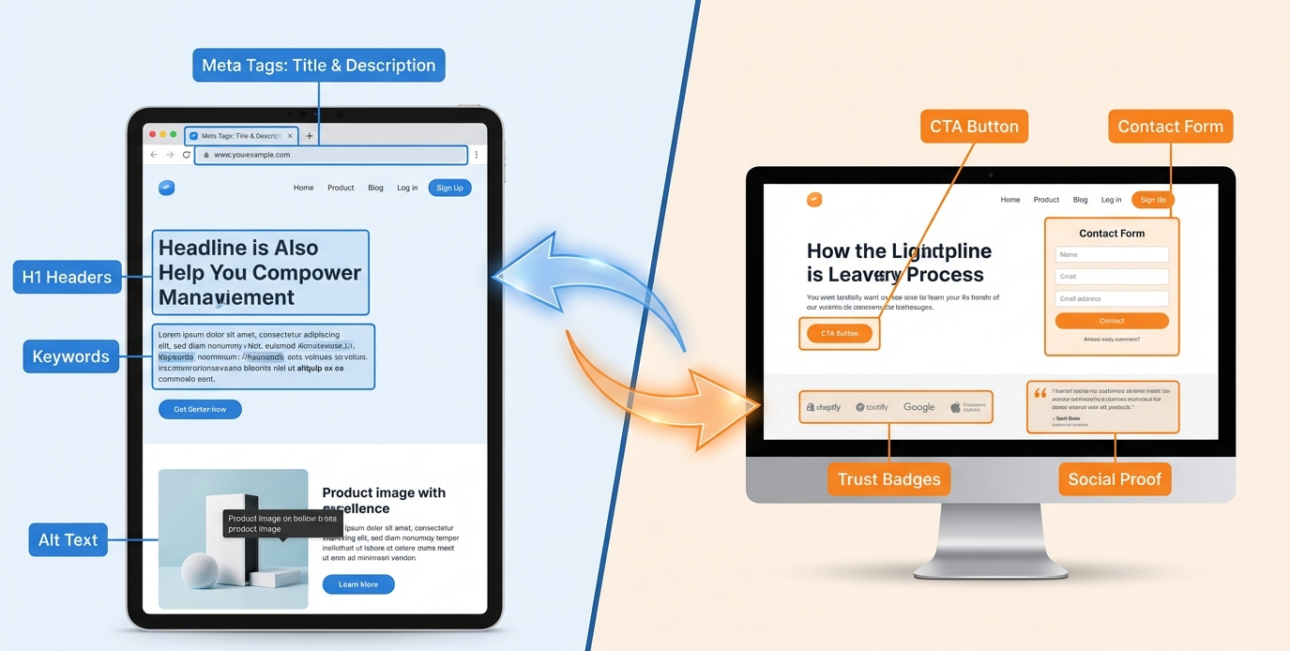
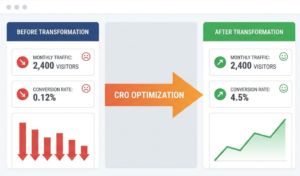
Marcus ran a boutique digital consulting firm in Singapore. After investing $8,000 in SEO over six months, his website finally appeared on Google’s first page for “business automation consultants.” The traffic numbers looked impressive in his analytics dashboard: 2,400 monthly visitors, up from just 300.
But when Marcus reviewed his actual revenue, he found himself staring at a disappointing reality when it came to conversions. Only three new clients had come through the website. His conversion rate sat at a dismal 0.12%. He was ranking well, attracting visitors, but his landing pages were essentially digital brochures that informed without persuading.
Then Marcus discovered the missing piece: conversion rate optimization (CRO). By redesigning his landing pages to balance search visibility with CRO psychology, he transformed those 2,400 monthly visitors into 168 qualified leads, with a 7% conversion rate. His revenue from organic search increased by 5,750% without spending an additional dollar on traffic acquisition.
This transformation from ranking-focused SEO to CRO for landing pages represents the evolution happening across modern digital marketing. Building landing pages that both rank highly in search engines and convert visitors into customers has become the essential skill for small and medium enterprises (SMEs) competing in digital markets.
The Critical Gap Between Ranking and Revenue
Most SMEs approach digital marketing with a sequential mindset: first get traffic through SEO, then worry about conversions later. This fragmented approach creates landing pages optimized for search engines but designed without consideration for human psychology and decision-making.
The statistics reveal this disconnect. According to Unbounce’s 2024 analysis of 41,000 landing pages handling 464 million visits, the median conversion rate across all industries stands at just 6.6%. Yet top performers consistently achieve 10% or higher, with exceptional pages reaching 15-20% conversion rates in optimal conditions. The difference between average and exceptional performance often comes down to integrating SEO and CRO from the beginning rather than treating them as separate initiatives.
Consider the fundamental conflict. SEO demands keyword-rich content, comprehensive information, and authoritative depth to satisfy search algorithms. CRO requires clarity, brevity, and focused persuasion to drive immediate action. Without strategic integration, you create pages that rank but fail to convert, or convert well but never get seen.
The solution lies in understanding that SEO and CRO aren’t competing priorities but complementary disciplines that must work in harmony from the first moment of landing page design.
Why SMEs Need Both SEO and CRO Working Together
For small and medium enterprises operating with constrained budgets, the integration of SEO and CRO delivers three critical advantages that justify the additional complexity.
- Maximum return from limited marketing budgets. SMEs typically can’t compete with enterprise budgets for paid advertising. Organic search represents the most cost-effective customer acquisition channel, but only when visitors actually convert. A landing page that ranks on page one but converts at 2% generates far less value than one ranking position five that converts at 10%. The mathematical reality is straightforward: doubling your conversion rate has the same impact as doubling your traffic, but costs significantly less to achieve.
- Sustainable competitive advantage. Large competitors can outspend you on advertising, but they often struggle with organizational complexity that prevents rapid optimization. An agile SME that masters SEO-to-CRO integration can outperform much larger competitors by creating landing pages that accomplish both goals simultaneously. This integration becomes particularly powerful in local and niche markets where understanding specific audience psychology matters more than raw budget size.
- Compounding benefits over time. Unlike paid advertising where results stop when spending stops, landing pages optimized for both SEO and CRO continue generating value indefinitely. Each improvement to conversion rate amplifies the value of all future organic traffic. Each enhancement to search rankings increases the audience exposed to your conversion-optimized messaging. These effects compound, creating asymmetric returns that grow more valuable as time passes.
Step 1: Start With Search Intent, Not Just Keywords
The foundation of effective SEO-to-CRO integration begins with understanding search intent. Traditional keyword research identifies what people search for, but intent analysis reveals why they’re searching and what they hope to accomplish.
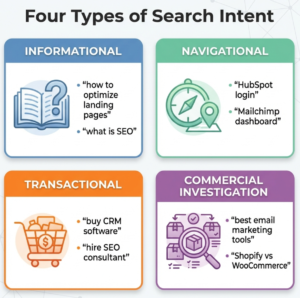
Search intent falls into four primary categories, each requiring different landing page approaches.
Informational intent represents users seeking knowledge or answers, typically signaled by queries beginning with “how,” “what,” or “why.”
Navigational intent indicates users looking for specific websites or brands.
Transactional intent reveals users ready to make purchases or take action, often including words like “buy,” “price,” or “best.”
Commercial investigation intent captures users comparing options before deciding, commonly expressed through searches for “review,” “comparison,” or “alternative.”
For SMEs, transactional and commercial investigation intents deliver the highest conversion potential. A search for “project management software” suggests early research, while “asana alternative for small teams” indicates someone actively comparing solutions and likely closer to a purchase decision.
Here’s how to align your landing page with search intent:
- Begin by identifying the dominant intent behind your target keyword. Use Google’s search results as your guide because the pages that rank reveal what Google believes the intent to be. If the top results are all comparison articles, the intent is commercial investigation. If they’re product pages with pricing, the intent is transactional.
- Match your landing page format to the identified intent. For informational intent, create comprehensive guides that answer questions thoroughly before introducing your solution. For commercial investigation, build comparison pages that objectively evaluate options while highlighting your advantages. For transactional intent, design product or service pages with clear value propositions and immediate purchase paths.
- Craft your headline and opening paragraph to immediately confirm you understand the visitor’s intent. Someone searching “how to reduce customer churn” expects different content than someone searching “customer retention software pricing.” Your landing page must signal within the first five seconds that it addresses their specific need.
Step 2: Build Your SEO Foundation Without Sacrificing Persuasion
Once you’ve identified search intent, the next step integrates SEO requirements with conversion-focused messaging. This balance requires careful attention to specific page elements that serve both objectives.
Title tags and headlines represent your first opportunity for integration. Your page title tag should include your primary keyword within the first 65 characters while also creating curiosity or promising value. Compare these two title tags for the same keyword:
Generic SEO-only title: “Customer Retention Software | CRM Tools for Businesses”
Integrated SEO-CRO title: “Customer Retention Software That Cuts Churn 40% | Try Free for 14 Days”
Both titles include the target keyword, but the second adds specificity and a clear action that increases click-through rates and sets conversion expectations.
- URL structure should be clean and keyword-rich while remaining readable. Avoid auto-generated URLs filled with numbers and symbols. Use clear, descriptive URLs that both search engines and humans can understand: yoursite.com/customer-retention-software rather than yoursite.com/product?id=12847.
- Meta descriptions don’t directly impact rankings but significantly influence click-through rates from search results. Write meta descriptions that incorporate your target keyword naturally while previewing the value proposition and benefit visitors will find on the page. Include a specific outcome or result when possible.
- Header hierarchy serves both SEO and readability. Use one H1 tag that includes your primary keyword and clearly states the page’s value proposition. Structure subsequent content with H2 and H3 tags that incorporate semantic variations of your keyword while organizing information logically for scanners. Research from Unbounce’s 2024 Benchmark Report shows that pages with clear hierarchical structure convert at significantly higher rates than those with flat organization.
- Body content requires the most careful balance. SEO benefits from comprehensive content that thoroughly covers a topic, typically 1,200-2,000 words for competitive keywords. CRO benefits from concise, scannable content that drives toward conversion actions. The solution is strategic content layering: use your above-the-fold space for focused conversion messaging, then provide comprehensive supporting information below the fold for both SEO value and late-stage prospects who need additional validation.
- Internal linking supports both SEO authority distribution and user journey optimization. Link to relevant pages on your site using descriptive anchor text, creating pathways that guide visitors toward conversion while distributing page authority across your website.
Step 3: Design for Mobile-First CRO
Mobile optimization represents a non-negotiable requirement for modern landing pages. Google’s mobile-first indexing means the mobile version of your page determines search rankings, while Unbounce data shows that mobile devices now drive the majority of traffic across most industries. Yet mobile conversion rates typically lag desktop performance by 8% or more.
This mobile gap represents both a challenge and an opportunity for SMEs. By designing landing pages that convert effectively on mobile devices, you immediately outperform competitors who treat mobile as an afterthought.
- Page speed stands as the most critical mobile factor. Research compiled by Every second of load time costs approximately 7% in conversions, with the critical threshold at 2 seconds. Pages loading in 0-2 seconds perform dramatically better than those requiring longer. For mobile users on potentially slower connections, speed optimization becomes even more crucial.
Reduce page weight by compressing images, minimizing code, and eliminating unnecessary scripts. Use tools like Google’s PageSpeed Insights to identify specific optimization opportunities. Prioritize above-the-fold content to load first, allowing visitors to begin engaging with your page while additional elements continue loading in the background.
- Form design requires particular attention on mobile devices. Unbounce research indicates that 81% of users abandon forms after starting them, with mobile friction a primary contributor. Reduce form fields to the absolute minimum required for your conversion goal. Research shows that reducing fields to five or fewer can double conversion rates compared to longer forms.
For mobile users, implement auto-complete functionality, ensure form fields are large enough for easy tapping (minimum 44×44 pixels), and use appropriate input types that trigger correct mobile keyboards (email fields should trigger the email keyboard with @ symbol, phone fields should trigger the numeric keypad).
- Visual hierarchy becomes more critical on smaller screens where less information is visible at once. Your unique value proposition must be immediately visible without scrolling. Call-to-action buttons should stand out with contrasting colors and sufficient size for easy tapping on touch screens.
Consider implementing progressive disclosure for complex information. Rather than displaying everything at once and overwhelming mobile visitors, reveal information progressively as they scroll or through expandable sections they can tap to reveal more detail.
Step 4: Craft Value Propositions That Convert Skeptics
Your value proposition represents the bridge between attracting visitors through SEO and converting them through persuasion. It answers the fundamental question every visitor asks within three seconds of arriving: “Why should I care about this?”
Effective value propositions for SME landing pages follow a specific structure that addresses visitor psychology while incorporating SEO elements naturally.
Lead with the outcome, not the feature. Compare these two value propositions for the same accounting software:
- Feature-focused: “Cloud-based accounting software with automated invoicing, expense tracking, and tax calculation.”
- Outcome-focused: “Spend 10 hours less on bookkeeping each month so you can focus on growing your business.”
The second approach immediately communicates the benefit in concrete, measurable terms. It incorporates keywords naturally (“bookkeeping,” “business”) while focusing on the transformation rather than the tool.
Quantify whenever possible. Specific numbers create credibility and help visitors visualize results. According to research on conversion optimization frameworks, specificity significantly improves conversion rates by reducing perceived risk. Instead of “increase sales,” specify “increase sales by 40% within 90 days.” Instead of “save time,” quantify “reduce reporting time from 4 hours to 20 minutes weekly.”
Address the primary objection immediately. Every product or service faces a dominant objection that prevents conversion. For expensive solutions, the objection is cost. For new technologies, it’s complexity or learning curve. For established markets, it’s differentiation from competitors. Your value proposition should acknowledge and counter this objection directly.
- If price is the obstacle: “Enterprise-grade features at small business prices—starting at $29/month.”
- If complexity is the concern: “Setup in 5 minutes, no technical expertise required.”
- If differentiation is unclear: “The only solution built specifically for architecture firms, not adapted from generic software.”
Incorporate trust signals strategically. Rather than generic claims about being “trusted” or “leading,” incorporate specific, verifiable trust elements. Client counts (“Join 2,847 growing businesses”), industry recognition (“Rated #1 by GovTech Weekly”), or concrete results (“$847M in client revenue generated”) all provide social proof while remaining factual and specific.
Step 5: Structure Content for Scanners and Searchers
The average attention span for web visitors has decreased to just 47 seconds according to recent research, yet SEO requires comprehensive content. This apparent conflict resolves through strategic content organization that serves both skimmers who need quick answers and detailed researchers who want thorough information.
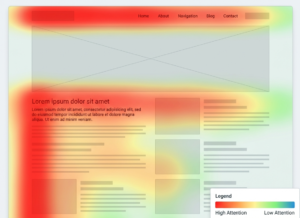
- Implement the F-pattern layout. Eye-tracking studies consistently show that visitors scan web pages in an F-shaped pattern: horizontally across the top, then down the left side with occasional horizontal movements. Structure your content to align with this natural scanning behavior.
Place your most important information (headline, value proposition, primary CTA) in the horizontal bar at the top. Position supporting headlines and bullet points along the left vertical line. Use this pattern to guide visitors through your conversion funnel even if they never read your full content.
- Use content chunking to make information digestible. Break long paragraphs into shorter segments of 3-4 sentences maximum. Use subheadings every 200-300 words to create natural break points and allow scanners to jump to relevant sections. This structure serves both conversion optimization and SEO by making it easier for search engines to understand your content structure and extract featured snippet opportunities.
- Deploy strategic white space. Research on conversion rate optimization shows that white space around important elements increases attention and comprehension. Don’t fear empty space; use it deliberately to create visual breathing room that directs focus to your key messages and calls-to-action.
- Incorporate multimedia strategically. Video content can increase conversion rates significantly when used appropriately. Product demonstration videos, customer testimonials, or explainer animations provide information more efficiently than text while increasing engagement time, which signals quality to search algorithms. However, ensure videos supplement rather than replace essential written content that search engines need to understand your page.
Step 6: Optimize Calls-to-Action for Maximum CRO Response
Your call-to-action represents the conversion moment where SEO investment translates into business value. According to Unbounce’s research, landing pages with a single clear CTA convert at 13.5%, while pages with 2-4 links or CTAs manage only 11.9%. This data directly contradicts the instinct to provide multiple options and instead validates focused conversion paths.
- Clarity over cleverness. Your CTA button should communicate exactly what happens when clicked. Avoid vague language like “Submit” or “Click Here.” Instead, use specific, action-oriented text that describes the result: “Download Your Free Guide,” “Start Your 14-Day Trial,” “Schedule Your Free Consultation.”
- Reduce perceived risk. Conversion hesitation often stems from uncertainty about commitment. Your CTA copy should emphasize low friction and reversibility when applicable. “Try Free for 14 Days” converts better than “Start Your Trial” because it explicitly addresses the cost concern. “No credit card required” further reduces perceived risk for trial signups.
- Create strategic urgency without artificial scarcity. Genuine urgency can increase conversions, but fake countdown timers and artificial scarcity damage trust. Instead, create urgency through legitimate limited offers, seasonal relevance, or opportunity cost framing. “Lock in 2025 pricing before the January increase” provides real urgency. “Only 3 spots remaining” when you have unlimited capacity breeds skepticism.
- Optimize button design for visibility and action. Your CTA button should be the most visually prominent element on your page. Use contrasting colors that stand out from your overall design. Ensure adequate size for easy clicking or tapping (minimum 44×44 pixels on mobile). Include whitespace around the button to make it stand out further.
- Position CTAs strategically throughout the page. While maintaining a single primary conversion goal, place CTAs at multiple scroll depths to accommodate different decision speeds. Include a prominent above-the-fold CTA for visitors ready to convert immediately, then repeat CTAs at logical intervals for those who need more information before deciding.
Step 7: Implement Trust-Building Elements That Convert
Trust directly impacts conversion rates, particularly for SMEs competing against larger, more established competitors. According to research on digital marketing and conversion optimization, strategic trust signals can significantly improve conversion performance, but generic or poorly implemented trust elements can actually harm credibility.
- Client testimonials and case studies provide powerful social proof when presented with specificity. Generic testimonials (“Great service!”) add little value. Specific testimonials that describe the situation, solution, and quantifiable result create credibility and help prospects envision similar outcomes.
Effective testimonial structure: “[Client name/company] faced [specific problem]. After implementing [your solution], they achieved [specific measurable result] within [timeframe].”
Include names, photos, and company information when possible to increase authenticity. Video testimonials carry even greater weight because they’re harder to fabricate.
- Industry certifications and partnerships demonstrate legitimacy and expertise, but only if relevant to your audience. Display certifications prominently if they matter to your market. If your target audience doesn’t recognize a certification, including it wastes valuable space and creates confusion.
- Security and privacy signals matter increasingly to conversion-conscious visitors. Display SSL certificates, security badges, and privacy policy links prominently, particularly near form submissions or payment processes. However, avoid cluttering your page with excessive badges that may suggest you’re trying too hard to prove legitimacy.
- Clear contact information and physical presence help establish trust, especially for local businesses or those serving specific geographic markets. Display phone numbers, physical addresses, and business hours when relevant to your service model. This openness signals confidence and accessibility.
- Transparent pricing when applicable. For many SME products and services, displaying pricing on landing pages improves conversion by pre-qualifying visitors and reducing friction in the sales process. If your pricing varies based on specific needs, at least provide ranges or starting points rather than forcing visitors to request quotes for basic information.
How We Can Help You Build Landing Pages That Convert
Mastering the integration of SEO and CRO requires expertise across multiple disciplines: keyword research and search intent analysis, conversion psychology and persuasive copywriting, user experience design and mobile optimization, analytics implementation and performance tracking. Most SMEs lack the internal resources to develop and maintain this expertise while running their core business.
That’s where Vishwas Thakkar’s specialized approach delivers value. We don’t create generic landing pages using templates that ignore your specific market position, audience psychology, and competitive context. Instead, we build conversion-optimized landing pages tailored to your business objectives, target audience, and market dynamics.
- Our integrated process begins with comprehensive discovery: understanding your business model, analyzing your competition, researching your target audience’s search behavior and decision-making process, and identifying the specific conversion barriers your landing pages must address.
- We then architect landing pages that balance SEO and CRO from foundation to finish: implementing proper technical SEO elements that satisfy search algorithms, crafting persuasive messaging that converts skeptical visitors into qualified leads, designing mobile-first experiences that convert across all devices, and integrating analytics that reveal exactly what’s working and what needs refinement.
- Most importantly, we optimize for business outcomes rather than vanity metrics. Your success is measured by revenue generated, not just by search rankings or traffic volume. We continuously test, refine, and improve your landing pages to maximize return on your marketing investment.
If you’re ready to transform your SEO traffic into actual business results, schedule a free strategy session to discuss how landing page optimization can accelerate your growth. We’ll analyze your current situation, identify immediate opportunities, and show you exactly what’s possible when SEO and CRO work together rather than competing for your attention.
Frequently Asked Questions
1. Should I optimize for SEO first or CRO first when building a new landing page?
The most effective approach integrates both from the beginning rather than optimizing sequentially. Start with thorough keyword research and search intent analysis to understand what brings visitors to your page and what they expect to find. Then design your page structure, messaging, and conversion elements to satisfy both search algorithms and human psychology simultaneously. Sequential optimization often creates conflicts that require expensive rework.
2. How long does it take to see results from landing page optimization?
SEO components typically require 2-4 months to show meaningful ranking improvements, particularly for competitive keywords. However, CRO improvements can impact conversion rates within days of implementation. The combined approach means you begin capturing improved conversion rates from existing traffic immediately while simultaneously building the search visibility that drives additional traffic over time.
3. Can I use the same landing page for multiple keywords?
Generally, no. Effective landing pages align specifically with search intent, which varies significantly across keywords even in related topic areas. Someone searching “project management software” has different intent than someone searching “agile project management tools for developers.” Each query suggests different pain points, priorities, and decision criteria that require tailored messaging and positioning. Creating separate landing pages for distinct search intents typically outperforms attempting to serve multiple intents with a single page.
4. What’s a realistic conversion rate target for my industry?
The overall median conversion rate across industries is 6.6%. However, this varies substantially by sector. Financial services leads at 8.4% median conversion rate, while SaaS averages 3.8%. Events and entertainment achieve 12.3%, demonstrating how industry-specific factors significantly impact benchmarks. Rather than comparing against overall averages, identify the specific median for your industry and then target the 75th percentile (typically around 10%) as an initial goal, with 15%+ representing excellence.
5. How many form fields should I include on my landing page?
Research consistently shows that reducing form fields increases conversion rates. Studies indicate that limiting fields to five or fewer can double conversion rates compared to longer forms. However, this must balance against lead quality considerations. Fewer fields increase conversion quantity but may reduce lead qualification. The optimal approach requests only information essential for the immediate conversion goal. Additional qualification can occur in follow-up communications rather than creating friction at the initial conversion point.
6. Should my landing page include navigation links to other pages?
For dedicated conversion-focused landing pages, conventional wisdom suggests removing navigation to eliminate exit paths and maintain focus on your conversion goal. Unbounce research supports this, showing that pages with a single clear CTA convert better than those with multiple links. However, for pages also serving SEO purposes, some internal linking helps distribute page authority and can improve overall search visibility. The best approach depends on whether the page’s primary purpose is serving paid traffic (remove navigation) or ranking for organic search (include strategic internal links while maintaining conversion focus).
7. How often should I test and update my landing pages?
Continuous optimization delivers the best long-term results, but the specific testing cadence depends on your traffic volume. Pages receiving 1,000+ monthly visitors can support meaningful A/B testing on a monthly basis. Lower-traffic pages may require quarterly testing intervals to accumulate statistically significant data. Prioritize testing high-impact elements first: headline variations, CTA copy and design, value proposition presentation, form length and fields. Once you’ve optimized these primary conversion drivers, move to secondary elements like supporting copy, testimonial selection, and visual design details.
References
Unbounce. (2024). Conversion Benchmark Report: Average conversion rate by industry.